Less but Better: Dieter Rams, Braun, and the Pursuit of Essential Design
From the SK4 radio-phonograph to the 606 shelving system, Dieter Rams spent four decades proving that restraint is the highest form of design intelligence. His ten principles continue to shape how we think about the objects we live with.

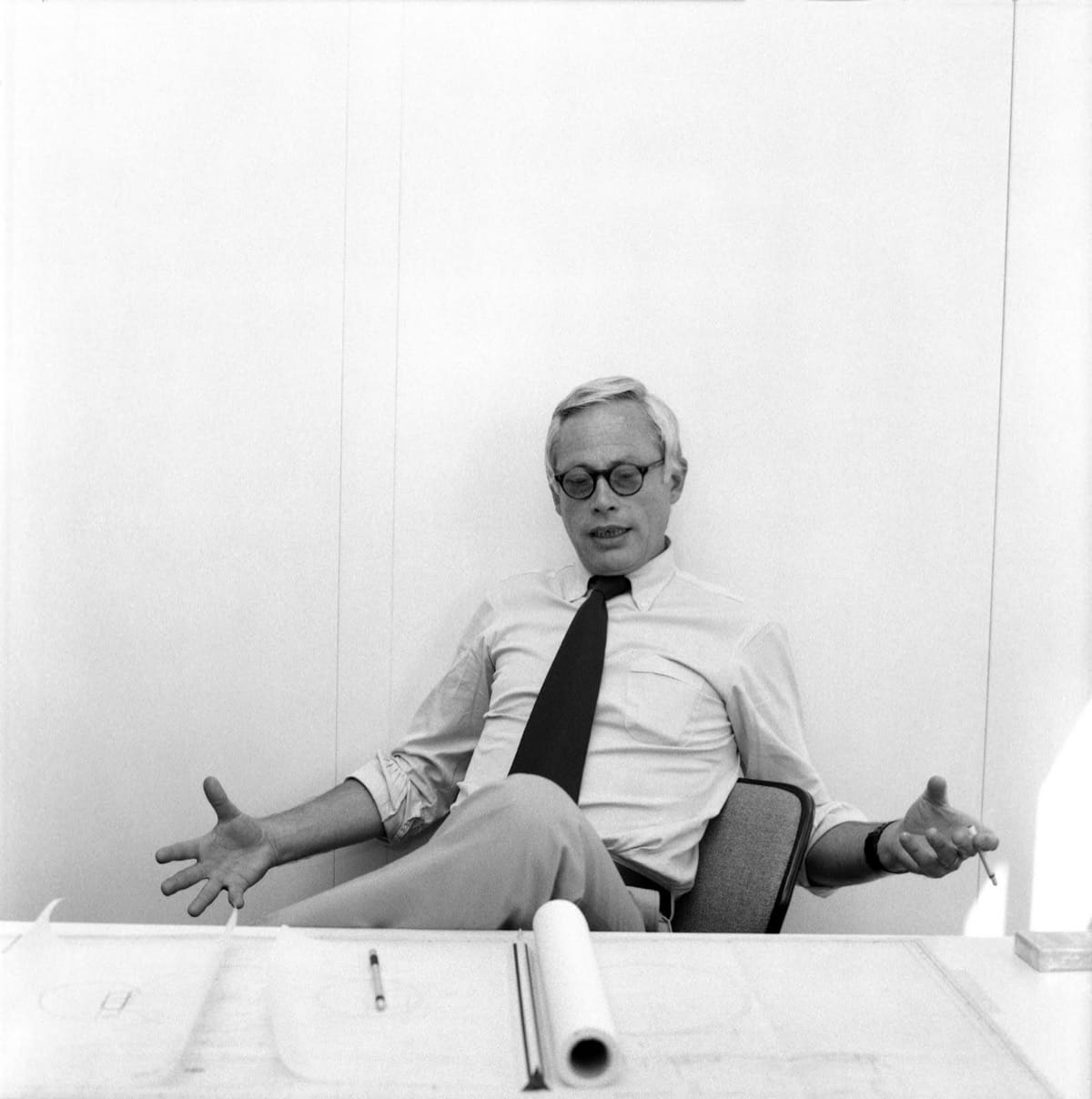
When Dieter Rams asked himself a simple question in the late 1970s — "Is my design a good design?" — he was working at the height of his influence. After two decades as head of design at Braun, he had shaped the aesthetic of everyday objects for millions of people. Rather than celebrating his success, he recognised that the world around him had become "an impenetrable confusion of forms, colours and noises." His answer to that question became his most lasting contribution: a framework for thinking about what design is actually for.
This article traces Rams's career from his early days at Braun through to his enduring influence on contemporary design. Along the way, we will examine his most significant products, unpack his ten principles of good design, and consider why his philosophy of restraint feels more urgent today than ever before.
Arriving at Braun: architecture meets industry
Rams arrived at Braun in 1955 as a young architect with carpentry training. He had studied at the Wiesbaden School of Art, working in architecture and interior decoration. When the Braun brothers recruited him to help modernise their family electrical business, he was entering one of the most progressive design environments in post-war Germany.
The company had already begun collaborating with the Ulm School of Design — an institution that carried forward the Bauhaus legacy of combining craft, art, and systematic thinking. Designers like Hans Gugelot and Otl Aicher worked there, and they became his peers and teachers.
What set Rams apart
What distinguished Rams from other talented designers was not his formal training but his approach to restraint. Where many post-war manufacturers were adding features, complexity, and ornament, Rams began stripping them away. He believed that a designer should think like an engineer as much as an artist — every aesthetic decision had to be justified by the object's purpose and the user's experience.
His working method centred on three questions:
- What is this object for? — Define the core function before touching a sketch pad.
- What can be removed? — Strip away everything that does not serve that function.
- Will this last? — Ensure the design resists trends and planned obsolescence.
The SK4 and the birth of a language
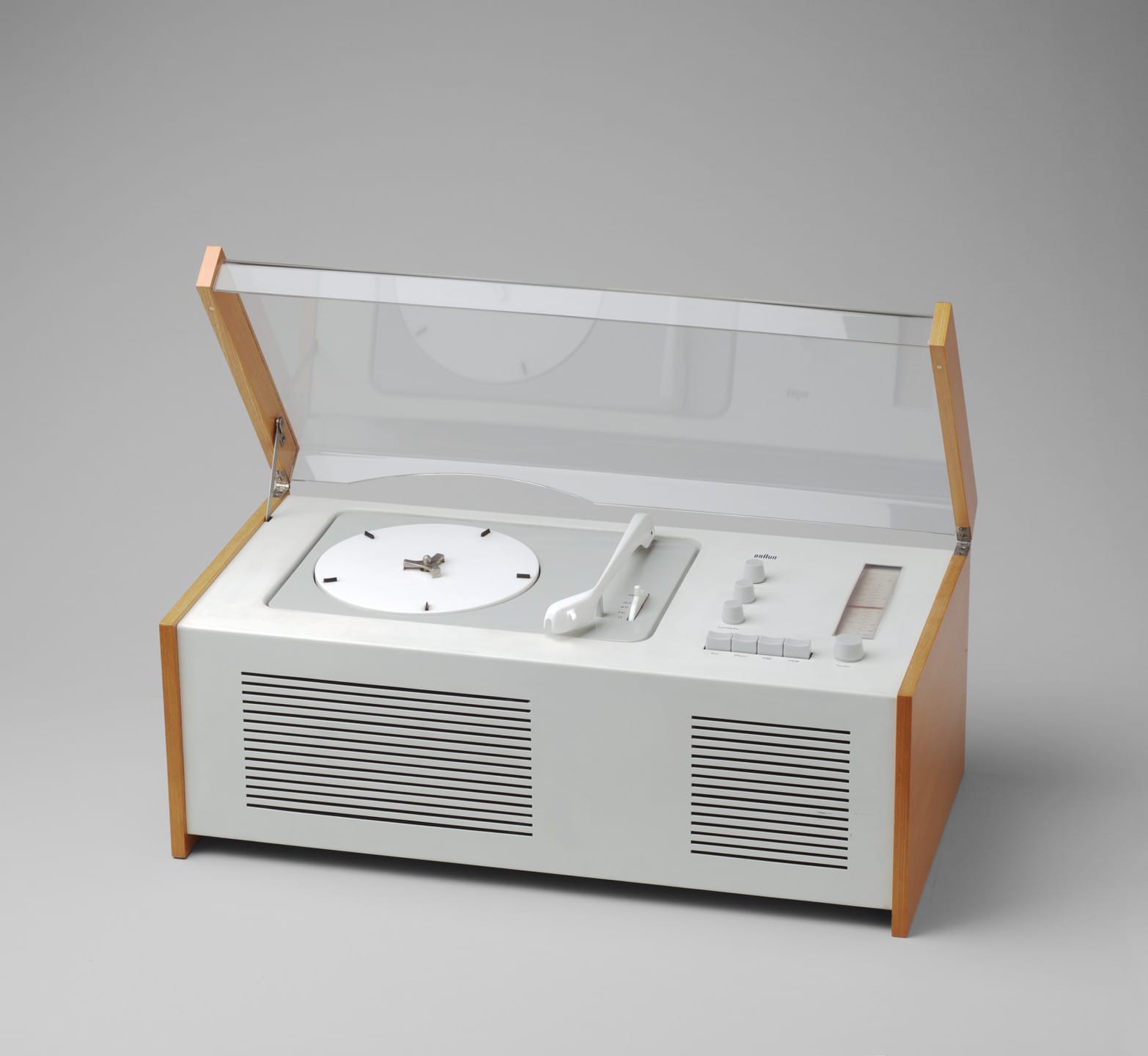
The SK4 radio-phonograph (1956) was Rams's first major product at Braun, co-designed with Hans Gugelot. It became one of the defining objects of post-war industrial design — not because it was technically revolutionary, but because it looked like nothing that had come before.
"The aesthetic quality of a product is integral to its usefulness because products we use every day affect our person and our well-being."— Dieter Rams
The SK4 replaced the heavy wooden cabinets of the 1940s with a clean metal-and-plastic enclosure. Its transparent acrylic lid let users see the turntable mechanism beneath — an early example of honest materiality in consumer electronics. The press nicknamed it "Snow White's Coffin," a label Rams reportedly disliked but could not shake.
Ten principles of good design
By the late 1970s, Rams felt compelled to codify what he had learned over two decades of practice. The result was his ten principles of good design — a set of criteria that reads as part manifesto, part self-interrogation:
- Good design is innovative — It does not copy existing forms. It advances both the product and the technology behind it.
- Good design makes a product useful — Function is the primary concern. Anything that detracts from it is a failure.
- Good design is aesthetic — Well-made objects enrich the daily environment. Ugly ones diminish it.
- Good design makes a product understandable — The product should explain itself at a glance.
- Good design is unobtrusive — Products are tools, not decorations or works of art.
- Good design is honest — It does not exaggerate a product's capabilities or novelty.
- Good design is long-lasting — It avoids fashion and therefore never appears antiquated.
- Good design is thorough down to the last detail — Nothing is arbitrary or left to chance.
- Good design is environmentally friendly — Design makes an important contribution to the preservation of the environment.
- Good design is as little design as possible — Less, but better.
The 606 Universal Shelving System
If the SK4 announced Rams's arrival, the 606 Universal Shelving System (1960) proved his ideas could endure. Designed for Vitsoe, the 606 is a modular wall-mounted shelving system built from aluminium uprights and interchangeable shelves, cabinets, and desk surfaces.
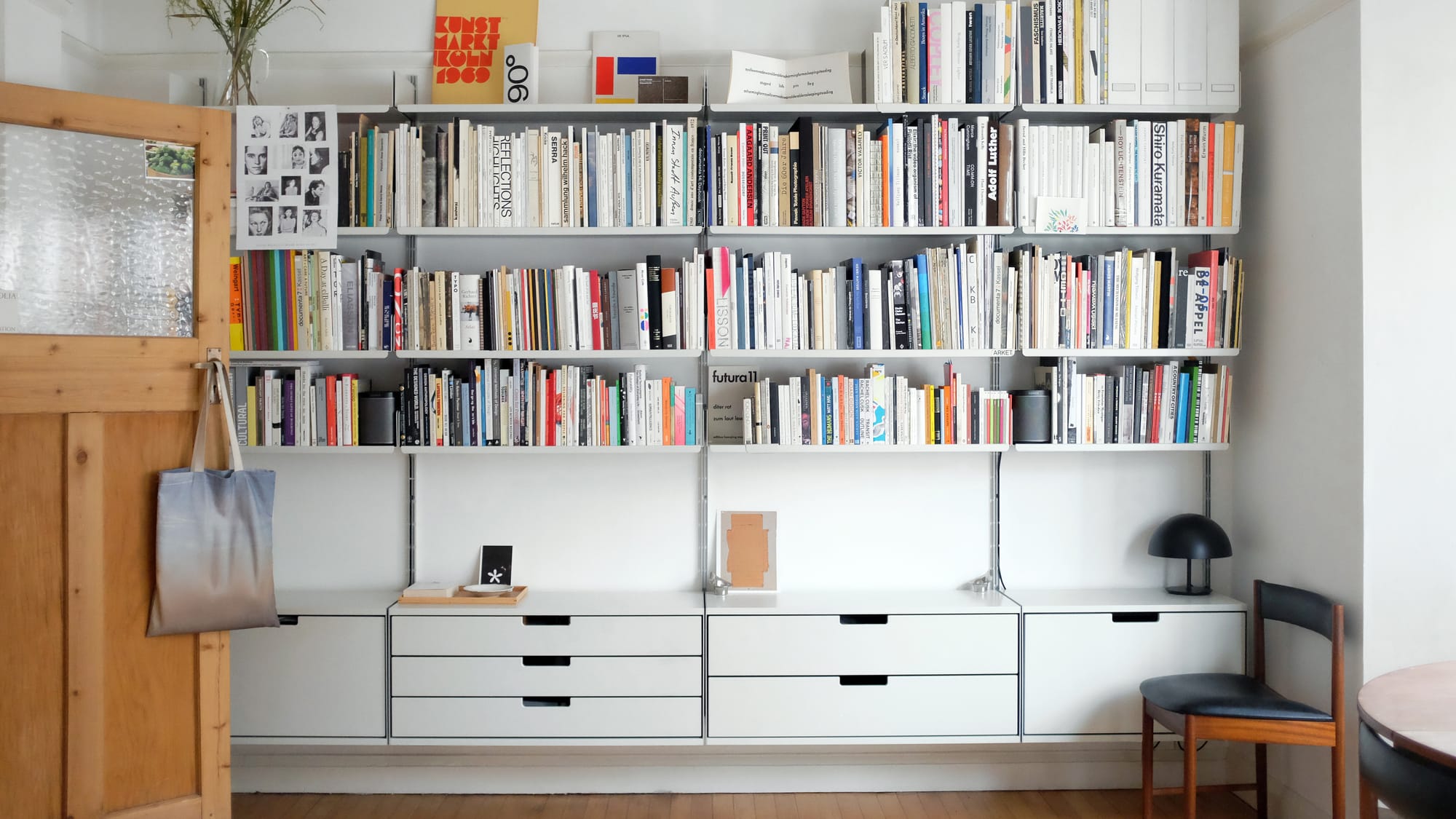
More than sixty years later, the 606 is still in production — virtually unchanged. Vitsoe will repair, reconfigure, and even buy back old units. It is one of the most compelling arguments for Rams's belief that good design must be long-lasting.
Influence and legacy
Rams's influence on contemporary technology is well documented. Jonathan Ive, Apple's former Chief Design Officer, has cited Rams as a primary influence on the design of the iPod, iPhone, and Mac product lines. The parallels are unmistakable: clean surfaces, considered proportions, restrained colour palettes.
But Rams himself was uncomfortable with this legacy. In later interviews, he expressed concern that his principles were being used to justify products designed for obsolescence — the very thing he had fought against.
"I have always regarded the ordinary things of everyday life as the most important. The work of design is to make them better."
A timeline of key products
| Year | Product | Significance |
|---|---|---|
| 1956 | SK4 Radio-Phonograph | First major collaboration with Gugelot; transparent lid |
| 1958 | TP1 Portable Radio | Pocket-sized; introduced modular thinking |
| 1960 | 606 Universal Shelving | Modular, repairable, still in production |
| 1962 | T1000 World Receiver | Broadcast radio as high design |
| 1975 | ET55 Calculator | Direct ancestor of the iPhone calculator |
Design has always been a negotiation between what is possible and what is appropriate. Rams spent his career arguing that appropriateness — restraint, honesty, care — matters more than novelty. In an era drowning in excess, that argument only grows stronger.