
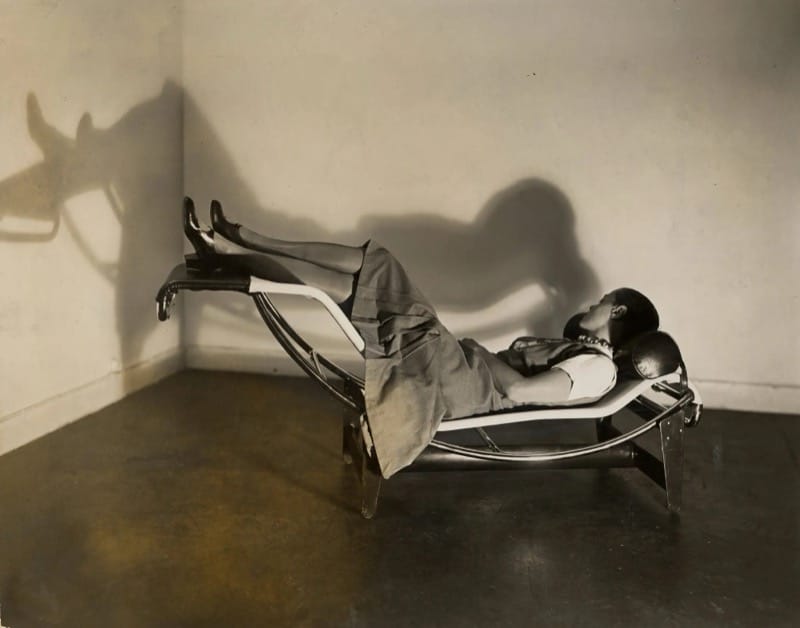
Charlotte Perriand understood something her contemporaries often missed: furniture is not sculpture. It has to work with the body, not against it.
When Perriand arrived at Le Corbusier's studio in 1927, she was twenty-four and already committed to the idea that modern furniture should serve the human body rather than impose an aesthetic upon it. Her contributions to the LC4 chaise longue, the LC2 armchair, and other canonical pieces were driven by an understanding of ergonomics that was unusual for the time.
Her later work in Japan, where she studied traditional craft and spatial thinking, deepened this commitment. The furniture she designed after the war combines Western industrial methods with Japanese sensitivity to material and proportion.